
Art & Interiors
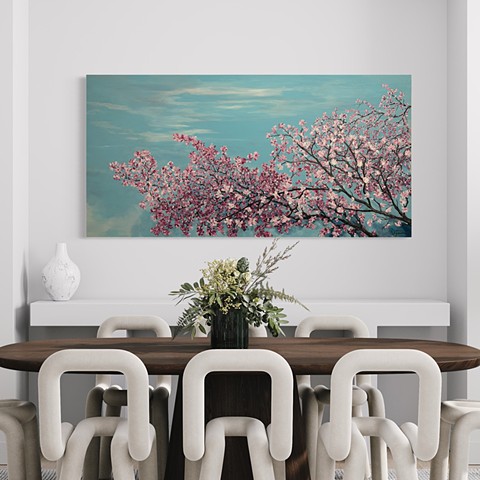
How to Choose the Right Size Abstract Painting for Your Living Room
Choosing artwork for your living room is about more than finding a painting you love. The size of the artwork can completely change how a room feels.
A painting that is too small can disappear against a large wall, while artwork that is too large can compete with the furniture and architecture. The right abstract painting for your living room should feel intentional—large enough to make an impact, while still allowing the room to breathe.
For collectors and interior designers, large-scale abstract art can be particularly effective in living rooms because it creates a focal point and gives the space a sense of personality.
So how do you know what size painting is right for your room?
Start With the Wall, Not the Painting. Before choosing artwork, look at the wall where the painting will hang.
Is it a large, uninterrupted wall? Is there a sofa beneath it? Is the wall part of an open-concept space? Are there windows, shelving or architectural details nearby?
These questions are important because the ideal artwork size depends on the visual scale of the entire wall.
A common mistake is choosing a painting based solely on its dimensions without considering the furniture beneath it or the surrounding negative space.
Instead, think of the painting and the furniture as one composition.
Choosing Abstract Art Above a Sofa
The wall above a sofa is one of the most popular places for a large abstract painting.
As a general guideline, artwork above a sofa often looks best when its width is approximately two-thirds to three-quarters of the sofa's width.
For example, if your sofa is approximately 90 inches wide, artwork somewhere around 60–70 inches wide can create a balanced relationship.
This doesn't mean you have to follow a formula exactly. Abstract art is especially flexible because colour, texture and movement can influence how large or small a painting feels.
A highly textured or visually energetic painting may have a stronger presence than a quieter work of the same dimensions.
When to Choose a Large Abstract Painting
If you have a large blank wall, a large abstract painting can be much more effective than a collection of small pieces.
Large-scale artwork creates visual weight and gives the room a clear focal point.
Consider a large painting when:
You have a substantial uninterrupted wall.
Your furniture is large or generously scaled.
The room has high ceilings.
You want the artwork to become the focal point.
Your interior has a relatively simple or neutral palette.
You want one statement piece rather than a gallery wall.
A large painting can also help connect the different elements of a room.
For example, an abstract painting incorporating blue, green and neutral tones can visually connect upholstery, rugs, wood, stone and other natural materials throughout the space.
What Size Is Considered Large-Scale Art?
There is no single definition of large-scale artwork, but paintings measuring approximately 48 inches or more in one dimension can begin to have a significant presence in an interior.
Works measuring 60, 72 or even 84 inches in width can become architectural elements within a room.
For particularly large walls, consider going bigger rather than trying to fill the space with several small pieces.
A large-scale abstract painting can make a room feel more sophisticated because it gives the eye one strong visual anchor.
Don't Be Afraid of Oversized Wall Art
One of the most common concerns collectors have is:
"What if the painting is too big?"
In many contemporary interiors, the opposite is actually the bigger problem.
Artwork that is too small can make a beautiful room feel unfinished.
Oversized wall art can work particularly well in rooms with:
High ceilings
Large sofas
Open floor plans
Minimalist furniture
Neutral walls
Large architectural features
Generous amounts of natural light
The key is proportion.
An oversized painting should feel connected to the room rather than simply placed on a large wall.
Consider the Height of the Ceiling
Ceiling height is another important consideration when selecting artwork.
A room with standard-height ceilings may benefit from a horizontal painting that visually extends across the wall.
A room with high ceilings may accommodate a taller vertical painting or a substantial square composition.
If you have a double-height wall, don't automatically choose a small painting simply because it is easier to place.
This is an opportunity for statement artwork.
Large vertical paintings can emphasize height, while horizontal paintings can emphasize width and create a sense of expansiveness.
Think About the Furniture Around the Painting
Your artwork doesn't exist in isolation.
Consider the sofa, coffee table, chairs, lighting, rugs and other furniture surrounding it.
If your furniture is substantial and visually heavy, a small painting may feel out of proportion.
Likewise, a delicate interior with smaller furniture may call for artwork with more breathing room.
One useful approach is to photograph your room and temporarily mark out the approximate dimensions of the artwork on the wall using painter's tape.
This simple exercise can make it much easier to visualize the scale before purchasing an original painting.
Consider the Colour of Your Interior
Size isn't the only factor that determines how powerful a painting will feel.
Color matters too.
A large painting with a restrained palette of whites, creams, soft blues or natural greens can feel surprisingly calm even when it occupies a significant portion of the wall.
A highly saturated or energetic painting may feel more dominant.
This is one reason textured abstract paintings can be so effective in contemporary interiors. Texture adds depth and interest without necessarily relying on strong color.
When choosing an abstract painting, look for colors that either complement your existing interior or introduce an intentional contrast.
You don't need the artwork to match your sofa or rug exactly.
In fact, artwork can be an opportunity to introduce something unexpected.
Texture Can Change the Perceived Scale
Two paintings with identical dimensions can have very different visual impact.
A heavily layered, textured abstract painting may appear more substantial because its surface creates shadows, movement and depth.
Texture becomes particularly beautiful when natural light moves across the painting throughout the day.
For this reason, consider not only the size of the canvas but also the surface, texture and technique when choosing contemporary artwork for your living room.
One Large Painting or Several Smaller Paintings?
This is ultimately a question of the feeling you want to create.
A single large abstract painting tends to create:
A stronger focal point
A cleaner, more contemporary appearance
Greater visual impact
A sense of calm and simplicity
Several smaller works can create:
A more collected feeling
More visual variety
Opportunities to combine different artists or styles
A gallery-wall effect
If your interior already contains many decorative elements, one substantial piece of large abstract art for the living room can often create a more cohesive result.
Leave Some Breathing Room
Choosing a large painting doesn't mean filling every inch of the wall.
Negative space is important.
The space around your artwork allows the eye to rest and helps the painting feel intentional.
This is particularly important with abstract art because the viewer needs room to experience the movement, colour and texture of the work.
A beautiful painting surrounded by thoughtful negative space can have much more impact than artwork crowded between furniture and architectural details.
Consider the View From Across the Room
Before committing to an artwork, step back.
Look at the wall from the entrance to the room. Then look at it from the sofa, dining area or other spaces where you regularly spend time.
Artwork should work from different distances.
From across the room, you should experience its overall colour and composition.
As you move closer, details, texture and brushwork should begin to reveal themselves.
This is one of the pleasures of collecting original abstract art: the painting can offer a different experience depending on how closely you view it.
Don't Forget the Rest of the Interior
The best artwork choices don't simply fill an empty wall.
They participate in the room.
Consider:
Architecture — Does the painting complement the lines and proportions of the space?
Furniture — Does the artwork have enough visual weight to relate to the sofa or other major pieces?
Colour — Does it complement or intentionally contrast with the room?
Texture — Does the surface of the artwork add another layer of interest?
Light — How will natural and artificial light interact with the painting?
Mood — How do you want the room to feel?
When these elements work together, the artwork becomes part of the architecture and atmosphere of the room.
Choosing Art for a Contemporary Interior
Contemporary interiors often benefit from artwork with a strong sense of scale.
Large contemporary abstract paintings can soften architectural lines, introduce organic movement and bring warmth to minimalist spaces.
For interiors featuring natural materials such as wood, stone, linen and leather, an abstract painting inspired by nature or water can create a subtle connection between the artwork and the surrounding environment.
This is particularly effective when the artwork includes layered textures and organic forms.
What If You Still Can't Decide?
If you're uncertain between two sizes, consider choosing the larger option—provided the artwork still maintains comfortable proportions around the furniture and architecture.
Many collectors initially worry that a large painting will overwhelm their room, only to discover that the larger scale creates the visual impact they were hoping for.
When in doubt, measure the wall and furniture first, mark the proposed artwork dimensions with painter's tape, and live with the outline for a day or two.
For a significant original artwork purchase, it can also be helpful to speak directly with the artist or an interior designer about proportion and placement.
The Right Painting Should Feel at Home in the Space
Ultimately, choosing the right size abstract painting isn't about following a rigid formula.
It's about finding the relationship between art, furniture, architecture and the people who live in the space.
The right piece should feel large enough to have a presence, but natural enough that it belongs in the room.
Whether you choose a 36-inch painting for a smaller space or a dramatic 60-, 72- or 80-inch work for a large wall, the goal is the same: to find artwork that changes how the room feels.
A well-chosen original painting doesn't simply decorate a living room.
It can become the element that brings the entire room together.
Explore Large-Scale Abstract Art
Jill Dubuc creates original, large-scale textured abstract paintings in Vancouver, inspired by water, nature, travel and the West Coast landscape.
Explore available artwork or inquire about a commissioned painting created specifically for your space.